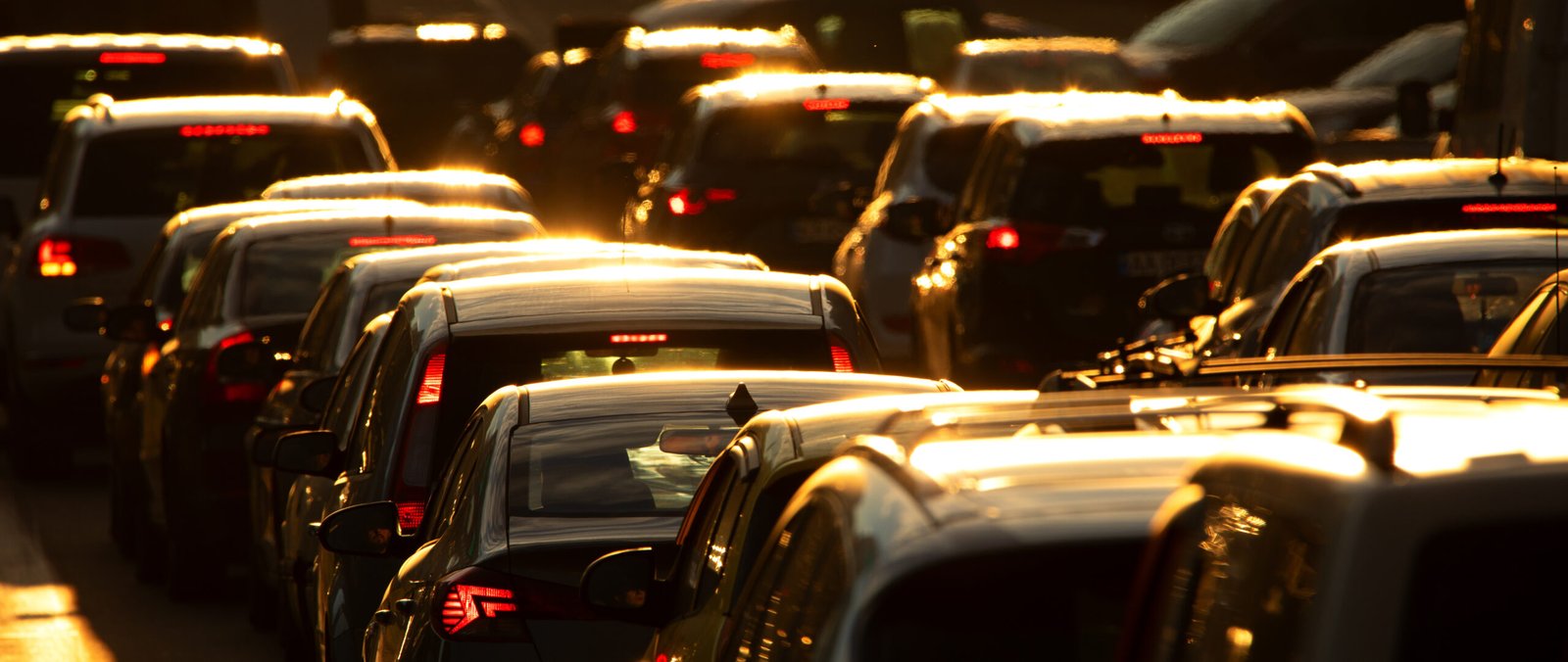
If you’re thinking about moving to this part of Florida, you’ve probably heard the traffic is bad. People who’ve been here a while will tell you the same thing. It is.
But here’s what most relocation guides leave out: Tampa Bay traffic is predictable in a way that makes it manageable for most people who live here. Once you understand how it works, you can design your life around it. And a lot of people do exactly that.
The question isn’t whether traffic exists. It’s whether you can live with it, and for most people who move here, the answer turns out to be yes.
What the traffic actually looks like
Traffic in this area concentrates around a handful of chokepoints that are well known to anyone who lives here. The bridges are the biggest factor. Three bridges connect St. Petersburg and Pinellas County to Tampa: the Howard Frankland Bridge on I-275, the Gandy Bridge, and the Courtney Campbell Causeway on US-60. When any of these slow down during rush hour, the backups extend for miles in both directions.
On the Hillsborough County side, I-75 and I-275 carry most of the major commuter load. The merge where they come together near downtown Tampa is consistently one of the slowest stretches in the metro. And in Pasco County, State Road 54 and the US-41 corridor have gotten significantly more congested as Wesley Chapel and Land O Lakes have grown.
INRIX, which tracks traffic data across the US, consistently ranks this metro area among the most congested in Florida. That said, it doesn’t crack the top 20 nationally, which puts it in perspective.
When it’s bad and when it isn’t
Peak hours run roughly 7 to 9 in the morning and 4 to 7 in the evening. Outside those windows, travel times drop significantly. Someone who can shift their schedule by an hour in either direction can often cut their commute time in half.
Weekends are generally fine. Fridays after 3 pm slow down when people head to the beaches, but Saturday and Sunday traffic in most communities is unremarkable. Summer actually brings some relief on weekday mornings when school traffic drops off. The busiest months are fall and winter when seasonal residents add to the regular commuter load.
What people who live here actually do about it
This is where it gets interesting. Longtime residents have adapted in ways that people from more traffic-tolerant cities find surprising.
A lot of people structure their work schedule around it. Flexible start and end times, or a compressed four-day week, are common. Remote work arrangements have made a significant difference for commuters who used to cross the bridges daily. If you’re still in a role where location matters, many employers in the area have become more accommodating about schedule flexibility.
The other thing people do is choose where they live based on where they work. If you’re relocating here and have a job or office in St. Petersburg, living in Pinellas County makes obvious sense. If your work is in north Tampa or Wesley Chapel, Pasco County puts you on the right side of the bridges entirely. This one decision removes most of the commute stress that people complain about.
The toll roads are worth knowing about
Florida has an extensive toll road network, and several roads in this area provide real alternatives to congested interstates. The Veterans Expressway (SR-589) is a parallel north-south route that connects Pasco County to the airport and south Tampa. The Selmon Expressway provides an elevated route through central Tampa. The Crosstown Expressway links Brandon and the southeast suburbs to downtown.
The SunPass transponder is how most people pay. If you’re moving here from a state without tolls, you’ll want to budget for it. Monthly toll costs for a regular commuter typically run anywhere from $30 to $100 depending on distance and route.
How it compares to where you’re coming from
This is the question I hear from people relocating to the area all the time. The honest answer depends on where you’re from.
If you’re coming from the Northeast, specifically the New York metro, New Jersey, or Connecticut, the commute here is meaningfully better. Rush hour exists, but the distances are generally shorter, the highways are wider, and public transit isn’t the variable it is up North. Most people from those markets find the adjustment easier than they expected.
If you’re coming from a small city or rural area, you’ll likely find this is an adjustment. People here spend real time in their cars, and it becomes part of how you plan your day.
The people who handle it best are the ones who choose their location based on how they actually live, not the one that looks convenient on a map but requires crossing a bridge twice a day to get anywhere.
Here’s a look at the real monthly cost of living in Florida if you want to think through the full picture before making a move.
💬 Trying to figure out which neighborhood puts you closest to your life, not just your commute?
Text HOME to 727-496-8301. Let’s talk through where to look.
FAQ
Is traffic in the area getting worse?
Yes, growth in Pasco, Hillsborough, and Pinellas Counties has increased traffic volume significantly over the past decade. Several road expansion projects are in progress, and managed lanes on I-275 and I-75 have added capacity in some corridors. The overall trajectory is more congestion. The most experienced drivers adapt by route, schedule, and location choice.
Does this area have good public transportation?
HART (Hillsborough Area Regional Transit) provides bus service in Hillsborough County, and Pinellas Suncoast Transit Authority covers Pinellas. Both are functional but coverage is limited and frequency is low compared to major Northeast metro systems. For most people here, a car is a necessity. If you’re coming from a car-optional city, plan accordingly.
What neighborhoods have the least traffic?
Generally, living within the same county as your primary destination reduces traffic stress significantly. Dunedin, Safety Harbor, and south Clearwater work well for people whose lives center on Pinellas County. Lutz, Land O Lakes, and Wesley Chapel work for those oriented north and east. Downtown St. Pete attracts people who want walkability and less highway exposure.
Relocating to this area and trying to find the right fit?
I specialize in helping people move to Florida from out of state without wasting time on the wrong neighborhoods. If you want a straight conversation about where to look based on how you actually want to live, let’s talk.
A Helpful Next Step
If you’re still working out which part of Florida makes sense for your situation, the Tampa Bay: Find Your Fit guide breaks down the counties, the communities, and what living in each area is actually like.
Also worth reading:
What is it like to buy a home here when you’re coming from out of state?
The real monthly cost of living in Florida
What surprises people after the move
Is Florida still worth it in 2026? The honest answer

Norma Vargas | Broker Associate, eXp Realty | Top 1.5% in 2025
I specialize in homes that didn't sell the first time, relocation, and divorce sales across Pasco, Pinellas, Hillsborough, and Hernando counties.
Whether you're selling, relocating, or just weighing your options, I'll help you make sense of the next step.
Let's Talk →Find me also on: Zillow · Realtor.com · Homes.com